
Criteria for identifying facilities subject to the pilot allocation of allowances for the 2025-2026 period
On 27 February 2026, the Ministry of Agriculture and Environment issued Decision No. 699/QD-BNNMT on the pilot allocation of GHG emission allowances for 2025 and 2026. Accordingly, 110 facilities in three sectors: thermal power, iron and steel production, and cement production, have been selected for the pilot allocation of allowances for 2025 and 2026. These facilities must meet the three criteria prescribed in Decree No. 119/2025/ND-CP dated 9 June 2025, amending and supplementing a number of articles of Decree No. 06/2022/ND-CP dated 7 January 2022 on GHG emission mitigation and ozone layer protection:
1) Being included in Appendix II of the Prime Minister’s Decision No. 13/2024/QD-TTg dated 13 August 2024, issuing the (updated) list of sectors and GHG-emitting facilities required to conduct a GHG inventory;
2) Having been in commercial operation since 1 January 2022, to ensure a full 3 years of data (2022, 2023, and 2024) for piloting the allocation of allowances, in accordance with the methodology for determining GHG emission allowances for allocated GHG-emitting facilities as stipulated in Decree No. 119/2025/ND-CP; and
3) For thermal power plants, they must be coal-fired, oil-fired and gas-fired thermal power plants. For iron and steel production facilities, they must be crude steel production facilities (facilities solely engaged in steel rolling and processing without the production of crude steel from ore or scrap steel are not eligible for the pilot allocation for the 2025-2026 period). For cement production facilities, they must be facilities producing clinker (independent grinding stations and plants that only produce cement without clinker production activities are not eligible for the pilot allocation of allowances for the 2025-2026 period).
Decree No. 06/2022/ND-CP stipulates that the list of sectors and facilities required to conduct a GHG inventory will be reviewed and updated biennially. Therefore, facilities within the aforementioned sectors that are NOT YET included in Decision 13/2024/QD-TTg or commenced commercial operations AFTER 1 January 2022, may be added in the next pilot allowance allocation period for 2027-2028. Concurrently, certain facilities in the three aforementioned sectors with low GHG emissions (under 3,000 tCO₂e/year) may be removed from the mandatory GHG inventory list, and correspondingly excluded from the pilot allocation of allowances list in the subsequent period.
Why are steel rolling and steel processing facilities, cement-only production facilities, and independent cement grinding stations not subject to the pilot allocation of allowances for the 2025–2026 period?
Direct GHG emissions (Scope 1) from electricity generation, iron and steel production, and cement production account for more than 40% of Vietnam’s total GHG emissions.
Regarding the electricity generation sector, selecting thermal power plants as the subjects for allocation is straightforward because, apart from thermal power (which accounts for over 99% of emissions from the electricity generation sector), other renewable energy power plants emit almost no GHGs.
Regarding iron and steel production, the crude steel production stage accounts for over 85% of total GHG emissions from this sector, primarily consisting of direct emissions from fuel and raw material consumption. Despite the significant emissions, the number of crude steel production facilities is relatively small; specifically, only 25 facilities are included in the pilot allocation of allowances for the 2025-2026 period. These facilities use four different technologies, namely blast furnace-basic oxygen furnace (BF-BOF), blast furnace-electric arc furnace (BF-EAF), electric arc furnace (EAF), and intermediate-frequency induction furnace (IF), but they all produce a product that can be standardized into a single unit: “ton of crude steel”. They are therefore suitable for allowance allocation based on “average GHG emissions per unit of product” – the allocation method prescribed in Decree No. 119/2025/ND-CP. By contrast, there are hundreds of facilities rolling steel and processing crude steel into finished and semi-finished steel products, with varying product types, sizes, raw material and fuel consumption levels, GHG emission levels, and other characteristics. These facilities CANNOT be converted into a single common unit. Decision No. 13/2024/QD-TTg alone includes more than 120 facilities of this type. The steel rolling and steel processing stages account for less than 15% of total GHG emissions from the iron and steel production sector, and these emissions are mainly indirect GHG emissions (Scope 2). Since steel rolling and steel processing facilities cannot be standardized based on a common “product” category, they are not subject to the pilot allocation of allowances for the 2025-2026 period.
Regarding cement production, the clinker production stage accounts for over 90% of total GHG emissions from this sector, predominantly consisting of direct emissions from fuel consumption and the decomposition of carbonate-containing raw materials. Emissions from the cement grinding stage account for less than 10% of the sector’s total GHG emissions and primarily stem from electricity consumption-indirect emissions. Many cement production facilities do not produce clinker themselves but purchase it from other facilities. Finished cement consists of various types with differing clinker-to-cement ratios, making it difficult to determine the GHG emissions per ton of cement. Consequently, cement-only plants and independent grinding stations are not eligible for the pilot allocation of allowances for 2025-2026.
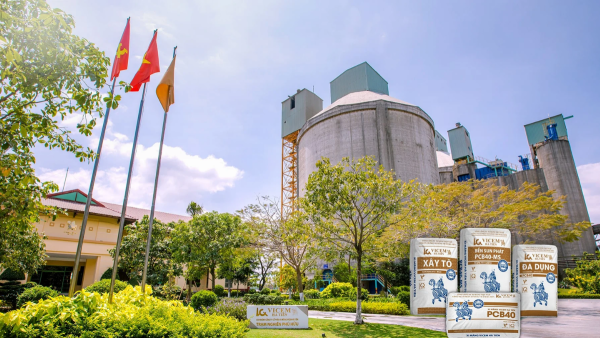
Steel rolling and steel processing facilities, cement-only production facilities, and independent cement grinding stations are not subject to the pilot allocation of allowances for the 2025–2026 period.
GHG inventory for the pilot allocation of allowances for 2025–2026
Allowances are allocated free of charge during the 2025-2026 pilot period. The methodology for allocating GHG emission allowances to facilities is stipulated in the Appendix of Decree No. 119/2025/ND-CP. GHG emission allowances are determined based on a combination of factors, including: historical data on the facility’s average product output over the three years of 2022, 2023, and 2024; GHG emissions per unit of product for the 2022-2024 period; forecasted data regarding the sector’s growth targets; the GHG emission reduction targets of the sector and of each facility according to their production and business plans; the facility’s emission reduction potential; as well as the facility’s technical, technological, and financial capacity in implementing GHG emission mitigation measures. Therein, the average GHG emission level per unit of product is determined based on the “average GHG emissions per unit of product,” specifically: kWh of electricity for thermal power plants; tons of crude steel for crude steel production facilities; and tons of clinker for clinker production facilities.
Notably, GHG emissions per unit of product are determined separately for each type of technology within each sector. Specifically, the thermal power sector is divided into 4 technology groups: coal-fired power, oil-fired power, gas-fired power, and co-firing; the iron and steel production sector also comprises 4 technology groups: BF-BOF, BF-EAF, EAF, and IF; whereas the cement production sector only applies a single emission level per unit of product, which is a ton of clinker, as the dry-process rotary kiln is currently the sole technology used for cement production.
The GHG inventory for the pilot allocation of allowances for 2025-2026 thus entails determining the product carbon footprint (including electricity, crude steel, and clinker), which is narrower in scope but more in-depth than a standard GHG inventory applied to all emission sources of a facility under Decree No. 06/2022/ND-CP, Decree No. 119/2025/ND-CP, and the circulars on MRV and GHG inventory issued by line ministries, specifically as follows:
Inventory boundary: Only covers the electricity generation stage for thermal power plants; the crude steel production stage for iron and steel production facilities; and the clinker production stage for cement production facilities. This means that if a steel plant has rolling and post-rolling finished product manufacturing stages, or if a cement plant also has a cement grinding/production stage, only the crude steel and clinker production stages are included within the inventory scope of this first pilot allocation period.
Emission sources: Only direct emission sources (Scope 1) from stationary fuel combustion and relevant industrial processes involving carbonate-containing raw materials directly associated with the production of electricity, crude steel, and clinker are included in the inventory scope for the pilot allocation of allowances for the 2025-2026 period. Other direct emission sources of the facility, such as stationary fuel combustion for auxiliary equipment (fire pumps, backup generators, etc.), mobile fuel combustion for transport equipment, wastewater treatment, waste treatment, and refrigerant leakage, are NOT included in this inventory scope. Other indirect emission sources from purchased electricity, purchased steam, etc., are also NOT included in the inventory scope for the pilot allocation of allowances for the 2025-2026 period.
Inventory tier: The Tier 1 method applies to direct emission sources from fuel consumption, while the Tier 2 method applies to emission sources from industrial processes – raw material consumption during steelmaking and carbonate decomposition during clinker calcination. The inventory methodology complies with guidelines from the circulars on MRV and GHG inventory issued by line ministries and IPCC guidelines. Applying the Tier 2 method to emission sources from industrial processes helps classify facilities with advanced or outdated technologies in crude steel and clinker production.
Emission factors: Consistently apply the emission factors in Decision No. 2626/QD-BTNMT dated 10 October 2022, of the Ministry of Natural Resources and Environment (now the Ministry of Agriculture and Environment), which published the list of emission factors for GHG inventory, supplemented by default emission factors from the IPCC.
Calorific value of fuels: Consistently apply the default net calorific values from the circulars on MRV and GHG inventory issued by line ministries, supplemented by the IPCC, for all facilities subject to the pilot allocation of allowances. The specific net calorific value of fuels for each facility may be used in subsequent allocation periods once specific guidelines from competent authorities are provided and all facilities can accurately supply this value.
The Ministry of Agriculture and Environment is the lead agency, coordinating with the Ministry of Industry and Trade and the Ministry of Construction to organize the pilot allocation of GHG emission allowances to each facility in the thermal power, iron and steel production, and cement production sectors for the 2025-2026 pilot period. In the coming period, the Ministry of Agriculture and Environment is simultaneously responsible for guiding the implementation, organizing the evaluation and review of the pilot process, and proposing refinements to the legal framework related to GHG inventory and the allocation of GHG emission allowances. The Ministry of Industry and Trade and the Ministry of Construction are responsible for monitoring, supervising, and assessing the implementation of emission allowances by the facilities allocated allowances within their respective scopes of management.
2,296 views, 2
Tags:
Bài viết liên quan