
On March 6, 2026, at the headquarters of the Ministry of Agriculture and Environment of Vietnam (MAE), MAE and Ministry of the Environment, Japan (MOEJ) co-organized a technical meeting titled “Regulations under Decree No. 119/2025/ND-CP (amending and supplementing several provisions of Decree No. 06/2022/ND-CP) on greenhouse gas (GHG) emission mitigation and ozone layer protection”. The meeting was coordinated by Overseas Environmental Cooperation Center (OECC) and Energy and Environment Consultancy Joint Stock Company (VNEEC).
The event brought together representatives from the Department of Climate Change Vietnam (DCC), the MOEJ, international organizations, the Japanese business community in Vietnam, and consulting firms operating in the energy and environmental sectors.
In his opening remarks, Mr. Le Ngoc Tuan, Deputy Director General of DCC, emphasized that Decree No. 119/2025/ND-CP is a key legal instrument for operationalizing Vietnam’s GHG emission mitigation roadmap and implementing the country’s climate commitments.
According to Mr. Tuan, the new decree focuses on four major areas: improving the mechanism for determining and allocating GHG emission quotas for facilities subject to GHG inventory requirements; strengthening the legal framework for the carbon market, including the trading of emission allowances and carbon credits; introducing additional provisions on the verification of emission reduction results to enhance the quality of the measurement, reporting and verification (MRV) system; and creating a stable policy environment to ensure that Vietnamese enterprises’ emission reduction results align with international standards. He also acknowledged the active role of Japanese companies in supporting Vietnam’s green transition, particularly through the Asia Zero Emission Community (AZEC) initiative.

Figure 1. Mr. Le Ngoc Tuan, Deputy Director General of DCC, delivered the opening remarks at the meeting
Representing the Japan side, Mr. Nomoto Takuya, Senior Negotiator, MOEJ, emphasized that achieving net-zero emissions by 2050 is a top priority in global climate policy. He noted that “visualizing GHG emission data across the entire supply chain” not only enhances transparency but also strengthens the competitiveness of businesses. He also referred to the Partnership to Strengthen Transparency for Co‑Innovation (PaSTI) initiative, launched in 2017 to promote emissions transparency across Asia. Currently, 157 facilities with links to Japan are included among the more than 2,000 facilities subject to emissions reporting requirements in Vietnam.
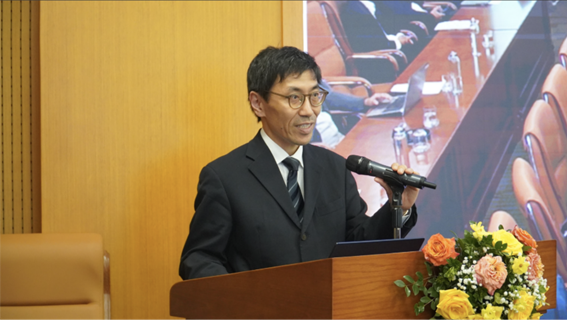
Figure 2. Mr. Nomoto Takuya, Senior Negotiator at the Climate Change Negotiations Office, International Strategy Division of MOEJ delivering the opening remarks
Mr. Kato Makoto, Board Member of OECC, introduced cooperation activities in Vietnam under the PaSTI framework. According to him, the program focuses on three main pillars: integrating emissions transparency into private sector operations; strengthening institutional frameworks and capacity for the MRV system; and standardizing emissions reporting to help businesses access international ESG finance. He emphasized that measuring and reporting GHG emissions should no longer be viewed as a cost burden but rather as a “passport” that enhances a company’s value within global supply chains.
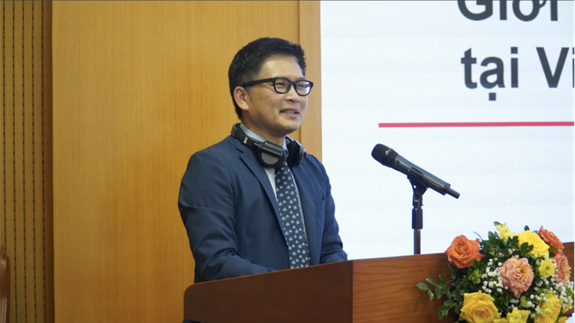
Figure 3. Mr. Kato Makoto presenting cooperation activities in Vietnam PaSTI at the meeting
Mr. Luong Quang Huy, Head of the GHG Emissions Management and Ozone Layer Protection Division, DCC, provided a detailed update on new regulations regarding GHG inventories. According to Mr. Huy, 2,166 facilities are currently required to conduct GHG inventories under Decision No. 13/2024/QD-TTg. These facilities fall into six main sectors: energy, transport, construction, industry, agriculture and forestry, and waste. The identification criteria include facilities with emissions of 3,000 tons of CO₂ equivalent per year or more, or those consuming 1,000 TOE of energy or above.
Accordingly, enterprises must fulfill three main obligations: conducting GHG inventories every two years, developing emission reduction plans for the 2026-2030 period, and submitting annual reports on emission reduction results. Mr. Huy also noted that during 2025-2026, Vietnam will pilot an Emissions Trading System (ETS) in three major emitting industries: thermal power, steel, and cement.
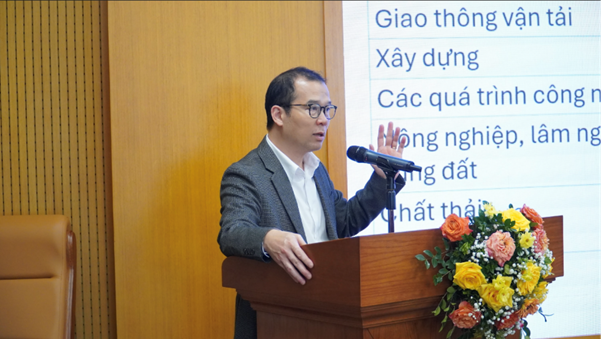
Figure 4. Mr. Luong Quang Huy presenting updates on regulations regarding mandatory GHG inventory reporting and the development of GHG emission reduction plans
At the meeting, Mr. Nguyen Tien Hai, Technical Director of VNEEC, delivered a presentation titled “GHG Inventory and Emission Reduction Planning – Tips for Preparation and Compliance” His presentation highlighted important timelines and reporting templates that enterprises should pay attention to: the GHG emission reduction plan for the 2026-2030 period must be submitted before December 31, 2025; GHG inventory reports are required every two years; and annual emission reduction reports must be submitted starting from 2026.
Mr. Hai also recommended that enterprises clearly identify emission sources under Scope 1, Scope 2, and Scope 3, apply techno-economic analysis tools such as the MAC Curve to identify optimal emission reduction measures, and digitalize emission data management systems while integrating emission reduction targets into corporate KPIs. According to him, early preparation will not only help enterprises comply with legal requirements but also strengthen their competitiveness in global supply chains.
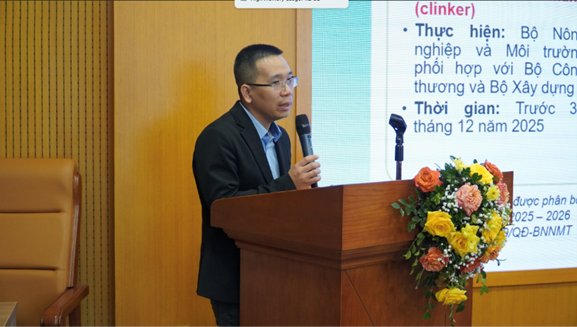
Figure 5. Mr. Nguyen Tien Hai presenting on GHG inventory and emission reduction planning at the meeting
Mr. Duong Chi Cong, Chief Auditor of Vietnam Technology and Environmental Solutions Joint Stock Company (VETS), introduced the development direction of an online facility-level GHG inventory reporting system. The system will enable enterprises to input activity data and calculate emissions directly on the platform, allow authorities to monitor and approve reports online, and standardize calculation methodologies across sectors such as waste, steel, cement, textiles, and transportation. The system is expected to be technically completed in 2026 and officially launched in early 2027.
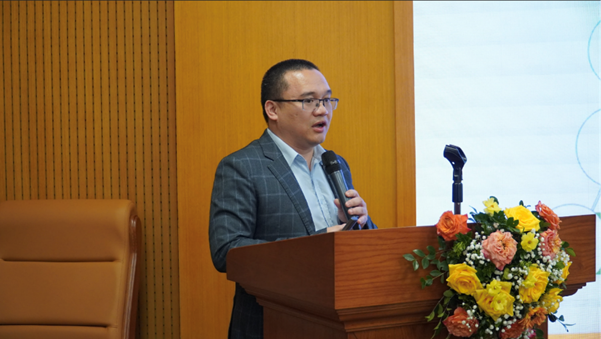
Figure 6. Mr. Duong Chi Cong presenting the future direction of the online GHG inventory reporting system at the meeting
During the session on green finance, Mr. Kobayashi Kunihiko, researcher at OECC, analyzed global trends in the development of the ESG finance market. He noted that prominent financial instruments include green bonds and green credit for environmental projects, as well as sustainability-linked bonds and loans (SLB/SLL), where interest rates are tied to the achievement of emission reduction targets. He also warned about the risk of greenwashing and emphasized the importance of transparent emissions data in attracting green finance.
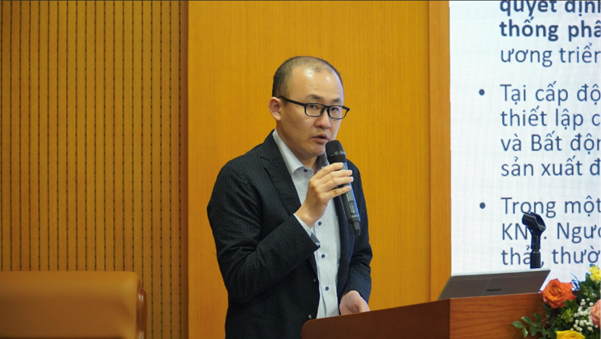
Figure 7. Mr. Kobayashi Kunihiko presenting case studies on ESG finance and climate change in Southeast Asia
Ms. Dang Thi Hong Hanh, Co-founder and Chief Executive Officer of VNEEC, shared insights on green finance trends in Vietnam. According to Ms. Hanh, Vietnam will require USD 21.7–87 billion to achieve its Nationally Determined Contribution (NDC) targets by 2030, while the total investment needed for the net-zero pathway by 2050 could reach USD 368 billion. Key financing instruments include green credit from the banking sector, green bonds, and sustainability-linked loans. However, the market still faces several challenges, such as fragmented policies, limited MRV data availability, and the need for upgrades to energy infrastructure.

Figure 8. Ms. Dang Thi Hong Hanh, Co-founder and Chief Executive Officer of VNEEC, presenting on green finance trends in Vietnam
During the discussion session, businesses raised questions regarding the practical implementation of Decree No. 119/2025/ND-CP and Decree No. 06/2022/ND-CP, including the methodology for allocating emission quotas, procedures for GHG inventory reporting, and the timeline for operating the online reporting system. Representing the DCC, Mr. Luong Quang Huy addressed questions related to the calculation of emission quotas, the two-year reporting cycle for GHG inventories, and the progress of the online reporting system, which is expected to be operational by 2027. Discussions also covered verification procedures for emission reports and the potential recognition of international carbon credits within Vietnam’s carbon market.
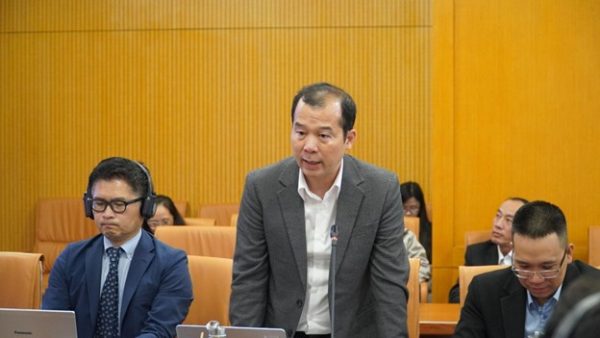
Figure 9. Mr. Luong Quang Huy, Head of the GHG Emissions Management and Ozone Layer Protection Division at the DCC, addressing questions during the discussion session
In his concluding remarks, Mr. Le Ngoc Tuan reaffirmed that the DCC will continue to refine the legal framework and promote the operation of the national online GHG inventory reporting system. He emphasized that the long-term goal is to enable enterprises to participate more actively in the domestic carbon market and international carbon credit mechanisms, thereby reinvesting in technological innovation and strengthening sustainable competitiveness.
In the coming time, VNEEC will continue to accompany government agencies and the business community in implementing GHG inventories, developing emission reduction plans, and accessing green finance mechanisms, thereby contributing to the transition toward a low-carbon economy and sustainable development in Vietnam.
3,216 views, 6
Tags:
Bài viết liên quan